Bangjja Yugi Museum
Architecture: Studio Heech (Heechan Park) + JHP Architects
Structural Engineering: CPA
Services Engineering: Kikwang ENG
Visualisation: MOGAMMA
In Gaeun-eup, a small town in Mungyeong, South Korea, a museum is dedicated to the work of Bongju Lee, a master of Bangjja Yugi, the traditional Korean bronzeware forged by heating, cooling and hammering the metal over and over. Studio Heech's renovation, completed in 2025, treats the building much as the craft treats bronze: nothing is thrown away, and the new work is layered into the old.
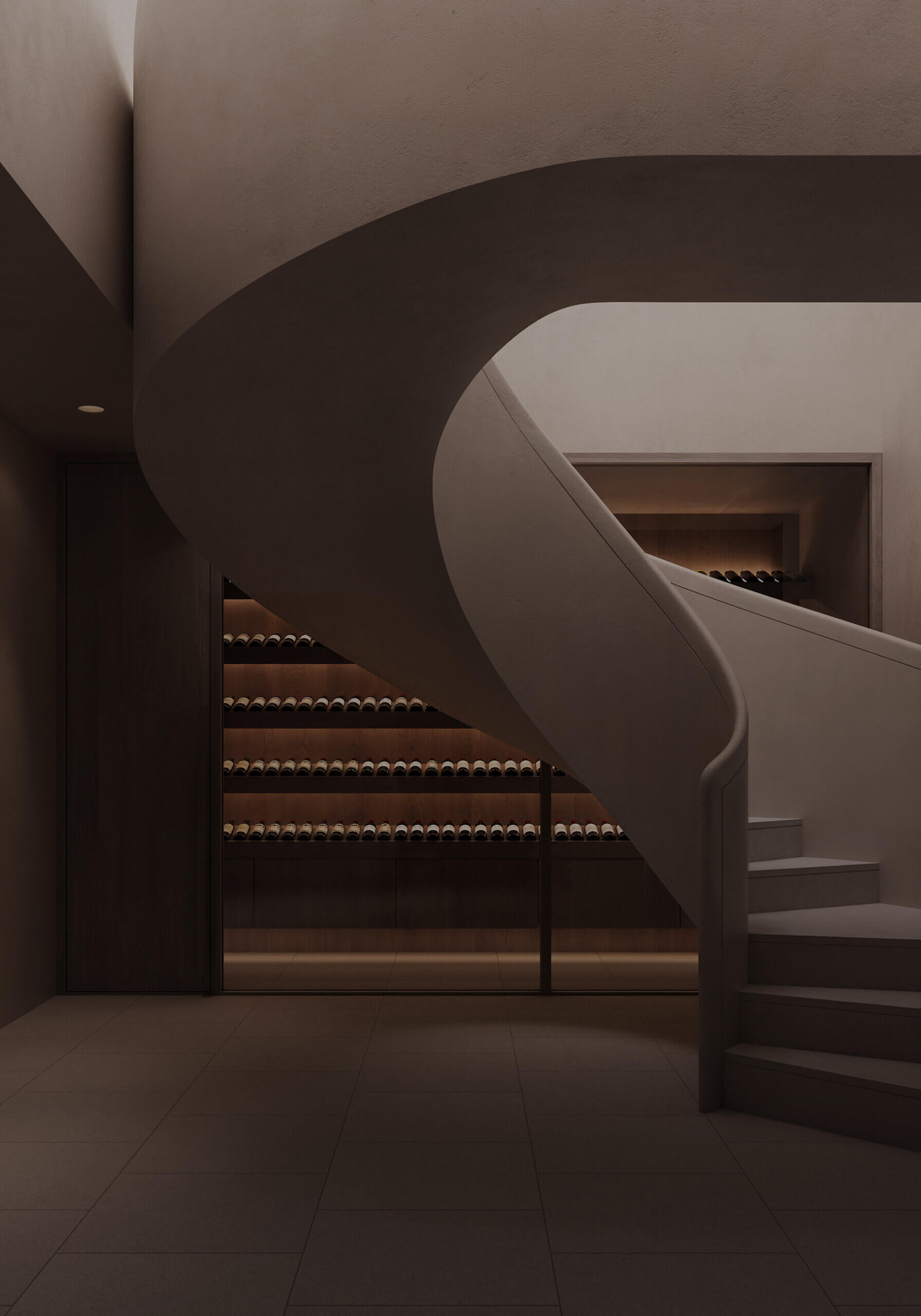
MOGAMMA produced a series of CGIs and an immersive VR experience of the museum, studying how its quiet, material-led interiors could be carried into an image and into a space you can step inside.
The original building was an archive and store for Lee's work, a concrete frame with columns painted to look like timber posts. Rather than demolish it, the architects kept the shell as they found it and built a second architecture inside: two rammed earth volumes and a circular stair, a set of buildings within a building.
The new materials are limited to earth, timber and steel, set against the existing concrete and left without paint or applied finishes. The walls are rammed earth, built by compacting damp soil one layer at a time inside glue-laminated timber frames, and the layers stay visible as bands across the finished surface. It is the architects' answer to the craft itself: where the bronze is shaped by repeated hammering, the walls are shaped by repeated pressing.


The earthen rooms are arranged around three themes, everyday life, religion and music, and visitors move back and forth between the old concrete shell and the new interiors. Near the entrance, a double-height space holds Bongju Lee's meditation bells, where their resonance is meant to be felt through the body as much as heard.
For visualisation, a building like this leaves very little to hide behind. There are no applied finishes, so the images depend on the grain of the earth, the joints in the timber and the way daylight falls across a rough wall. Our aim was to describe those surfaces honestly and let the architecture speak at its own pace.


More Projects
DA & Planning
Marketing
Competition & Conceptual